

Modified HIV drug could reverse vision loss, paralysis from MS, study suggests
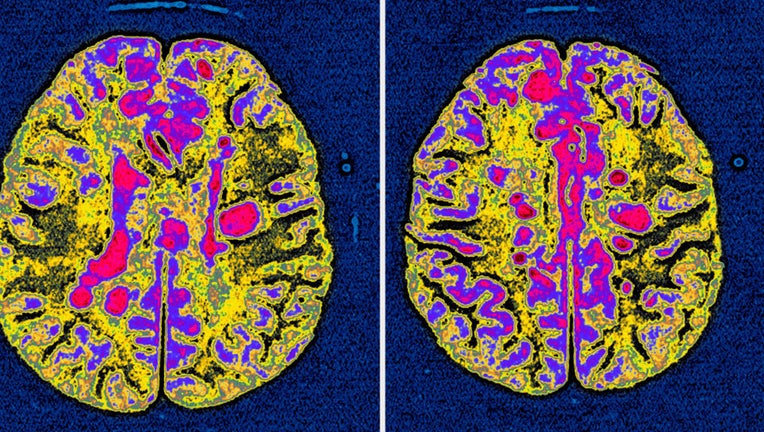
FILE - Myelin, The Protective Sheath Covering Nerve Cells In The Brain And Spinal Cord Is Slowly Replaced By Sporadic Patches Of Scar Tissue Sclerosis, Thus Progressively Paralyzing The Central Nervous System. Sclerotic Plaques In White. Cranial Ct S
Researchers have found that a modified version of a drug that treats HIV could actually help cure some symptoms of multiple sclerosis, according to the National Institutes of Health.
Modified HIV drug reverses vision loss and paralysis from MS
Dig deeper:
In a recent NIH study, kamuvudine-9 (K-9) was used to reverse vision loss and paralysis in animal subjects with multiple sclerosis.
Researchers believed K-9 prevented inflammasome, a cell-killing alarm system in the brain and spinal cord, from activating.
What they're saying:
"The remarkable reversal of some of MS’s most severe complications in animals, taken together with this drug’s promising safety profile, present a very compelling translational pathway," said Michael F. Chiang, M.D., director of NIH’s National Eye Institute (NEI).
Big picture view:
K-9 did not just stop the disease from getting worse. It protected the nerve wires and their protective coatings from being destroyed.
Looking at health records of human patients, researchers noticed that people taking similar antiviral drugs for other health conditions were less likely to get MS or suffer from MS relapses.
What's next:
Because K-9 stops cell damage and helps reverse symptoms that are already present, scientists hope to test it in human trials soon for MS and other serious nerve diseases like ALS.
How MS impacts the body
The backstory:
MS is an unpredictable disease that impacts the central nervous system, according to the National Multiple Sclerosis Society website.
The disease can interrupt the flow of information from the brain to other parts of the body.
Scientists used to think MS happened mostly because the body's security system accidentally attacked healthy nerve tissue.
Standard medicines try to stop this attack, which helps prevent future flare-ups, but they don't fix damage that already happened and can weaken the body's overall defense system.
Now, researchers believe the body’s immune system isn't what directly kills the cells. Instead, it triggers a "fire alarm" inside the brain and spinal cord called an inflammasome, which causes nerve cells to die, the NIH said.
The Source: Information for this article was taken from a National Institutes of Health news release. Information from the National Multiple Sclerosis Society website also contributed. This story was reported from San Jose.