

2026 Election: Prop 320 debate examines Arizona school budget mandates
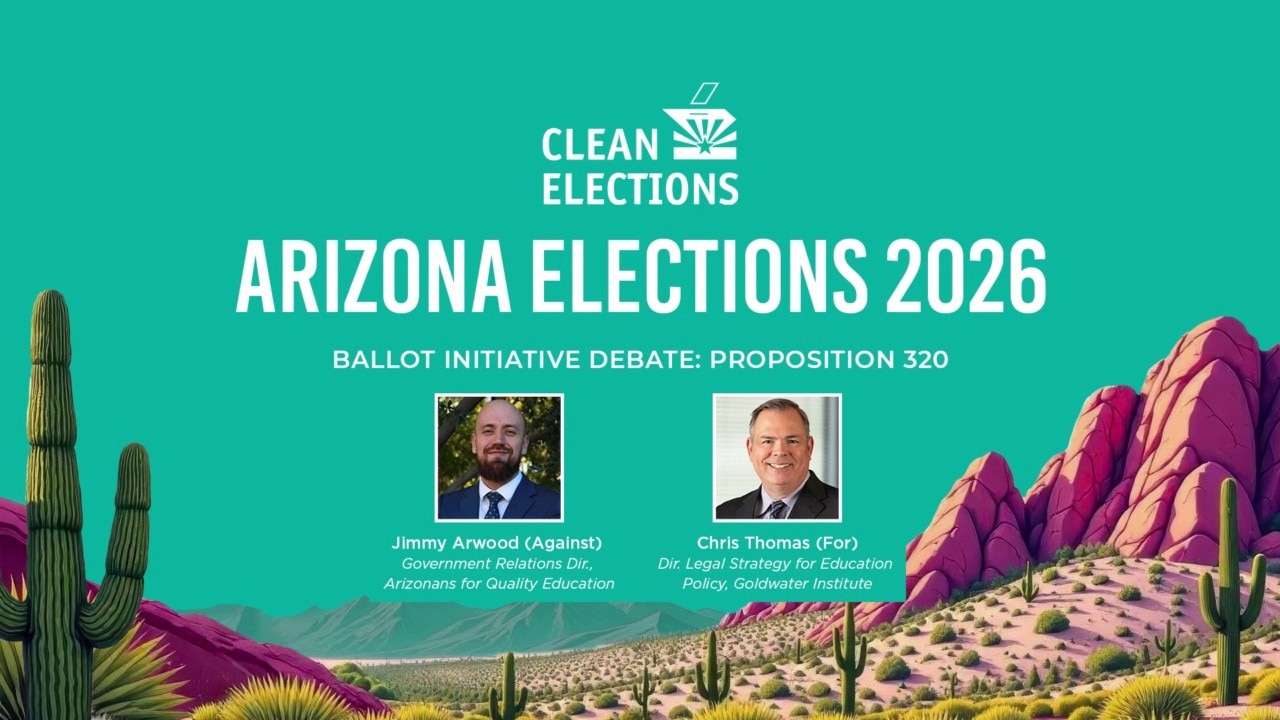
Prop 320 debate examines AZ public school spending
A debate over Proposition 320 brings key education issues to the forefront as supporters and opponents address proposed state spending requirements for Arizona public school districts.
PHOENIX - Arizona voters heard supporters and opponents square off over Proposition 320, a November ballot measure that could dramatically reshape how public school districts across the state spend their operational dollars.
The debate happened on September 24 at 6 p.m. MST.
What we know:
Held by the Arizona Citizens Clean Elections Commission, the debate focused on a measure that would require large Arizona school districts to allocate at least 60% of their operational budgets directly to classroom instruction.
What is Proposition 320?
Originating from the state legislature as SCR 1032, Proposition 320 targets districts with more than 7,500 students as well as any district located in Maricopa, Pima or Pinal counties, regardless of enrollment size. Under the proposal, covered districts currently falling below the 60% mark would be mandated to increase their "direct instructional expenses" by at least half a percentage point each fiscal year beginning in 2027 until they reach the mandated threshold.
Because the ballot initiative brings no new state dollars to help districts meet the requirement, school boards would be forced to reallocate existing operational funds to comply.
What counts as ‘direct instructional expenses’?
While the measure tasks the Arizona Auditor General with officially defining what constitutes "direct instructional expenses," current state accounting definitions put a wide range of operational services outside the classroom spending category. Non-instructional expenses currently include school bus transportation, campus safety personnel, custodial care, building repairs, air conditioning maintenance, sports programs, school meal programs and support staff such as counselors, social workers and literacy coaches.
What they're saying:
Supporters of Prop 320 argue that mandating a 60% classroom spending threshold ensures taxpayer dollars are prioritized where they impact students most, directly funding teacher instruction and learning materials while trimming down administrative fat.
For local districts like Litchfield Elementary School District — which reported a 57.5% direct instruction rate under current methodology for fiscal year 2025-26 — failing to meet annual progress benchmarks could trigger state penalties, including cuts to Classroom Site Fund allocations unless granted a rare waiver by the Superintendent of Public Instruction. Kyrene School District, which is in the process of shuttering many of its schools, would face $5 million in additional cuts to stay afloat.
Opponents, led by advocacy groups such as Save Our Schools Arizona, argue that the rigid 60% benchmark creates a dangerous trap for public education by starving non-classroom operations. Critics contend that school boards will have no choice but to cut vital resources, including special education programs, student mental health support and campus safety to satisfy the strict spending ratio.
Opponents with No Cuts for AZ Kids also highlight historical comparisons, noting that Texas passed a similar 60% classroom expenditure law in 2006, only for a bipartisan coalition to repeal it three years later after finding it ineffective and harmful to students. That group warns that because voter-approved statutes in Arizona are voter-protected under the state constitution, passing Prop 320 could permanently bind local school district budgets regardless of future consequences.
Who took part in the debate?
Chris Thomas (for) and Jimmy Arwood (against). Arwood is the government relations director of Arizonans for Quality Education. Thomas is the director of legal strategy for education policy at the Goldwater Institute.
What did the two sides say during the debate?
During the debate, Thomas argued that Prop 320 would align school budgets with what he believes to be the primary purpose of education: teaching and learning in the classroom. He pointed out that declining student proficiency rates coincided with a drop in direct instructional spending.
Thomas also emphasized that school districts can increase their direct instructional expenses to the 60% target set in Prop 320 gradually, at 0.5% per year. He said that gives some low-percentage districts up to 26 years to comply fully.
Harwood, meanwhile, countered that Prop 320 doesn't add new funding to Arizona schools or guarantee teacher salary increase. He said the proposals penalizes school districts with funding cuts, and that in order to reach the 60% target, districts will have to eliminate student support roles that are excluded from direct instruction, including school resource officers.
Harwood also said that rural districts with high transportation costs will be disproportionately harmed, and that the measure exempts charter schools and private schools that receive taxpayer funds.
The Source: Information in this report was gathered from the Arizona Clean Elections Commission, the Arizona School Boards Association, Litchfield Elementary School District, Kyrene School District, Save Our Schools Arizona and No Cuts for AZ Kids.