

Dragon Bravo Fire is now 10th largest wildfire in Arizona's history

Dragon Bravo Fire now considered a 'megafire'
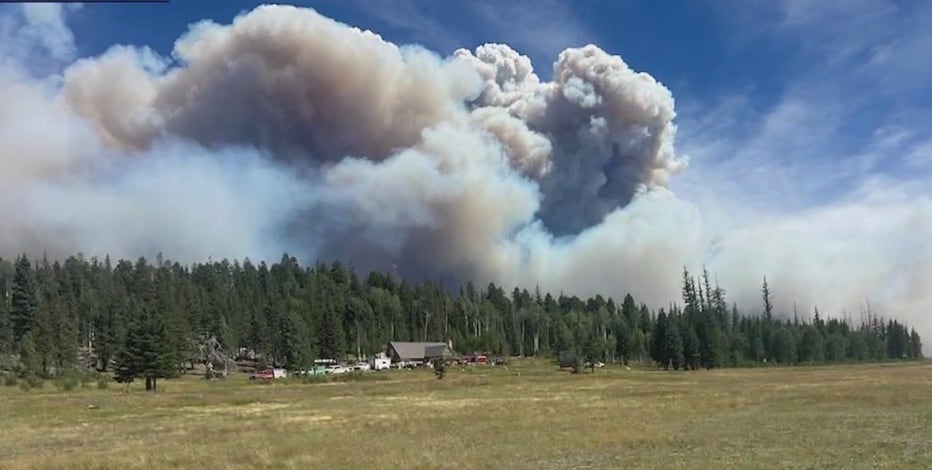
The Dragon Bravo Fire has burned over 111,000 acres near the Grand Canyon and is only 9% contained. The wildfire is the 10th largest in Arizona's history and is currently the largest fire burning in the continental United States.
FREDONIA, Ariz. - A fire that continues to burn near the Grand Canyon is now one of the biggest wildfires in Arizona's history.
The backstory:
The Dragon Bravo Fire was sparked by lightning on July 4, and was initially managed as a controlled burn before dry and windy conditions fanned the flames, prompting evacuations at the Grand Canyon's North Rim.
Arizona leaders, including Gov. Katie Hobbs, have been critical of how the fire was managed.
Arizona lawmakers demand answers as Dragon Bravo Fire threatens Grand Canyon's North Rim
The lightning-sparked Dragon Bravo Fire continues to burn near the Grand Canyon's North Rim, prompting concerns for the historic Kaibab Lodge and pushing politicians to demand answers regarding the initial containment efforts.
By the numbers:
As of Aug. 1, the fire has burned 111,969 acres, according to Watch Duty. Last week, crews managed to contain about 26% of the fire, but since then, historically dry conditions have dropped containment to 9%.
At least 70 structures have been destroyed in the fire, including a historic Grand Canyon lodge. The North Rim of Grand Canyon National Park is closed for the rest of the year.
About 1,200 personnel are assigned to the fire. It's currently the largest fire burning in the continental United States.
Southbound State Route 67 remains closed south of Jacob Lake due to the fire.
Dig deeper:
The fire is now the 10th largest wildfire ever recorded in Arizona. The largest wildfire in the state's history, the Wallow Fire, burned more than a half million acres near Alpine in 2011.
What they're saying:
"Obviously, we're dealing with some historic conditions here on the Dragon Bravo. For this kind of fire growth to occur this time of year is very rare," officials said during a news conference on July 30. "One of our values at risk obviously is the Kaibab Lodge, kind of right here in the middle, and then we’ve got the House Rock wildlife area. Again, a big part of the fire is on the Kaibab National Forest, basically from about here north, and then this part of the fire is on the Grand Canyon National Park."

'Just say a prayer': Dragon Bravo Fire nears Kaibab Lodge
Crews were making progress on the Dragon Bravo Fire until the fire blew up due to hot and dry conditions. The fire's containment has been cut in half as it continues to grow, threatening more historic buildings.
Big picture view:
FOX 10 visited Mesa Fire & Medical Department's training academy to learn more about what crews are up against, especially during the summer.
Firefighters battling Arizona's 10th-largest wildfire are facing an added element: triple-digit summer heat. Firefighters wear layers and carry heavy gear, which traps heat and prevents their bodies from cooling themselves down.
Mesa's rehabilitation truck is used by fire departments across the Valley to cool firefighters down. It allows them to submerge their arms in ice, stand in front of misting fans, and enter a cooling room.

A look at how firefighters find heat relief
FOX 10's Kenzie Beach visited the Mesa Fire & Medical Department's training academy to learn more about what firefighting crews are up against, especially during the summer months.
According to a NASA study, more firefighters die each year from heat stress than from smoke and flames. A firefighter can be overcome by their own body heat inside their suit in just 20 minutes because the heat buildup is trapped inside.
"In our gear, our sweat is not able to evaporate or absorb, so there is no way for it to cool your body down until you get out of the fire and take your gear off," explained Mike McCord, a rehabilitation truck engineer for the Mesa Fire & Medical Department. "While you're in your gear, your body temperature just continues to climb."