

DHS reveals Surprise warehouse turned ICE detention facility part of $38B plan
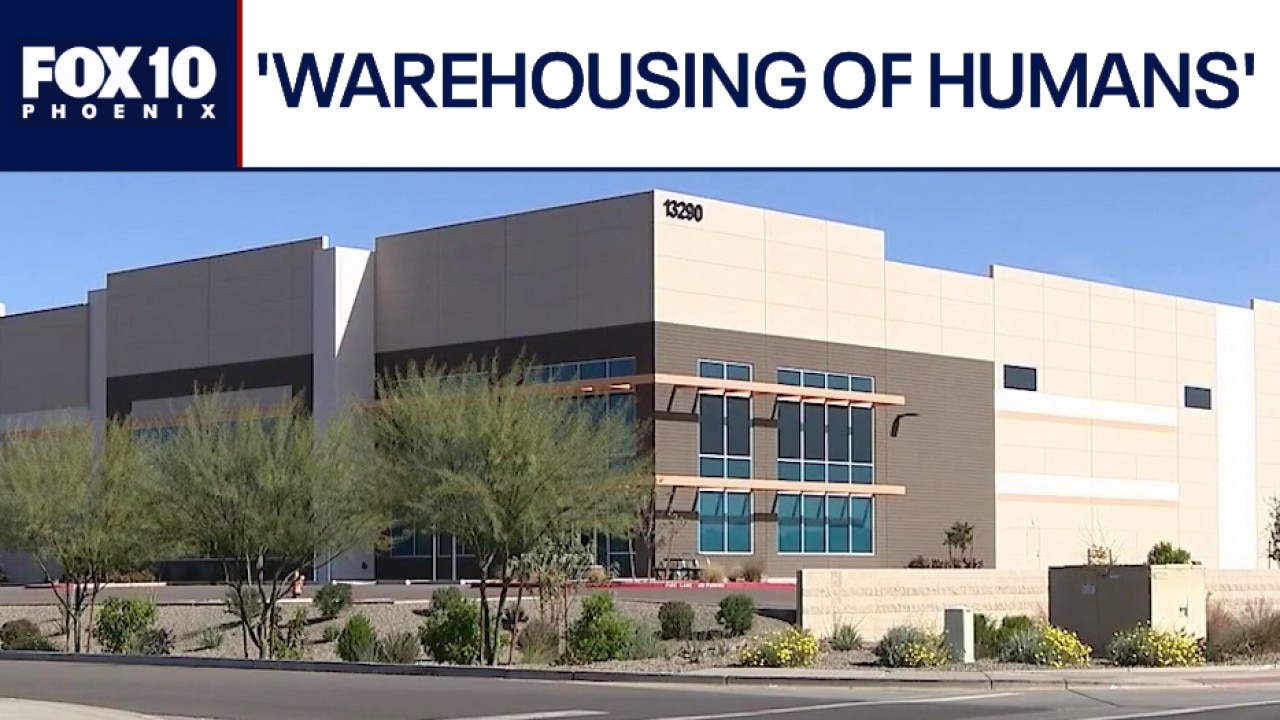
DHS documents reveal cost of Surprise detention facility
Local officials and residents are demanding answers surrounding the Surprise warehouse purchased for $70 million to be converted into an ICE detention facility. FOX 10's Steve Nielsen hears more from protestors.
SURPRISE, Ariz. - City councilors in Surprise held another council meeting on Feb. 17, hearing from many residents about the Department of Homeland Security's (DHS) plan to convert a local warehouse into a detention facility, as new documents reveal how much it’s going to cost taxpayers to build it.
One city councilor said that it doesn’t matter what the city does. No local law or ordinance passed would override the federal government's plan for the building. Still, many are attending these city council meetings to protest.
What they're saying:
"I support them. I support our fellow law enforcement that are willing to take up that armor as well," a resident said.
While another said, "there have been so many towns across the USA that have successfully kept ICE prisons out of their town that I'm hoping that surprise can do the same thing."
People in Surprise showed up to the council meeting—signs in hand—to once again voice their opinions both for and against DHS’s plan to build a detention facility at Sweetwater Avenue and Dysart Road.
"We're hoping that enough people show up and we do care and that we do want a voice to make a difference," a protestor said.
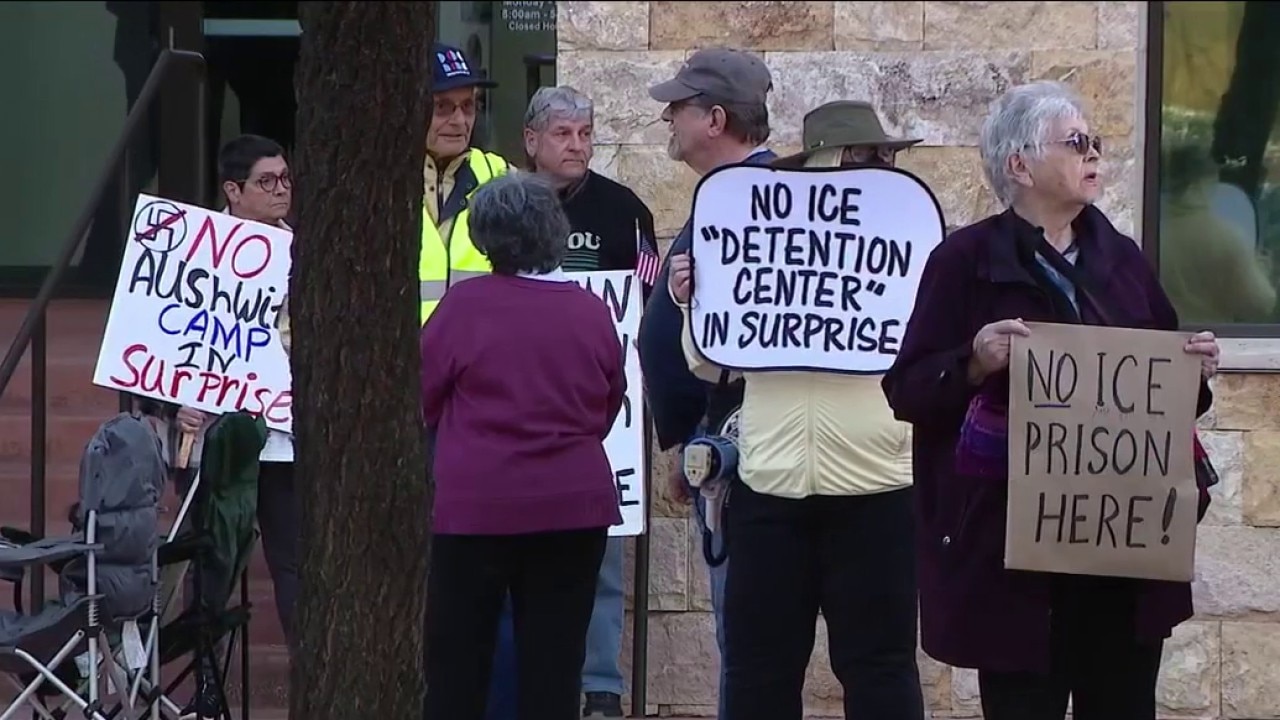
Residents voice safety concerns over planned detention facility in Surprise
Heated debates continue over plans to build an ICE detention facility in a residential area near Sweetwater Avenue and Dysart Road in Surprise. FOX 10's Taylor Wirtz learns what residents are saying about DHS's warehouse purchase.
The backstory:
The initial meeting drew strong reactions from all sides of the community, and sparked protests outside City Hall.
Some attendees said it's causing "trauma, fear, and heartbreak to the community around it," while others expressed support for law enforcement’s mission to protect the public, saying "the men and women have a job to do to protect us."
"If they’re going to locate here, they should have done some planning," one resident said during the meeting.
The controversy stems from the $70 million purchase of a warehouse by DHS, which the agency intends to turn into a 1,500-bed detention center. A newly released economic analysis from DHS provides further details on the project's scope.
By the numbers:
Retrofitting the facility is expected to cost $150 million and create nearly 1,400 jobs. Over three years, operations are projected to cost $180 million while generating approximately $16 million in annual tax revenue.
Local perspective:
The mayor of Surprise, Kevin Sartor sent a letter to DHS last week requesting information and clarification on their intended use of the site, and asking for an in-person meeting. He also said the city was not informed of the DHS plan prior to the acquisition.
Sen. Ruben Gallego, D-Ariz., responded to the newly released documents Tuesday, criticizing the focus of the investment.
"You’re not focused on law enforcement," Gallego said. "You’re trying to create these deportation mills where, instead of going after criminals, you’re having these massive investments in warehousing of humans. That’s not, I think, where the public is."
Dig deeper:
Many at the meeting asked council to take a firmer stance.
"It is not enough to say that the city of Surprise was not aware of the purchase. Now you're aware. So do something about it. Thank you," one resident said.
Some residents said, given its proximity to homes and schools, the facility would make Surprise unsafe.
"We are talking about bringing in a national flash point into our neighborhoods right next to our families," one said. Another added, "If every detainee is a true criminal, how is that safe for students regarding how it’s only half a mile away from my school."
The other side:
Some in attendance felt the opposite— saying they believe a facility would make Surprise safer.
"Law enforcement agents are removing criminals from our neighborhoods. It is much safer for me, my family and my neighbors if those criminals are detained securely as they await deportation," a resident said.
Rep. Paul Gosar, R-Ariz., who supports the administration’s immigration policies said he’s awaiting a formal response to his letter questioning the impacts on infrastructure.
A spokesperson for Gosar said the congressman has spoken to DHS about it, but "he continues to request a written response as the documents, while helpful, do not answer all questions in his letter."
Big picture view:
A DHS spokesperson emphasized the economic benefits and job creation associated with the project, but said that doesn't take into account making communities safe.
"ICE purchased a facility in Glendale, Arizona. These will be very well-structured detention facilities meeting our regular detention standards. Sites will undergo community impact studies and a rigorous due diligence process to make sure there is no hardship on local utilities or infrastructure prior to purchase. The Glendale Processing facility and its construction are expected to bring 1,372 jobs and would contribute $154.1 million to GDP. It’s also projected to bring in $32.9 million in tax revenue.
"These economic benefits don’t even take into account that removing criminals from the streets makes communities safer for business owners and customers. ICE is targeting criminal illegal aliens including murderers, rapists, pedophiles, gang members and more. 70% of ICE arrests are of illegal aliens charged or convicted of a crime in the U.S. Thanks to the One Big Beautiful Bill, ICE has new funding to expand detention space to keep these criminals off American streets before they are removed for good from our communities."
What's next:
This is all part of a broader plan the documents reveal by DHS to spend $38.8 billion to create a new detention model nationally.
Map of the location of the detention facility.
The Source: This information was gathered from Surprise city officials, Arizona lawmakers, a DHS spokesperson and attendees at the Feb. 17 meeting.