

Mpox: Arizona reports case involving a new type of the virus
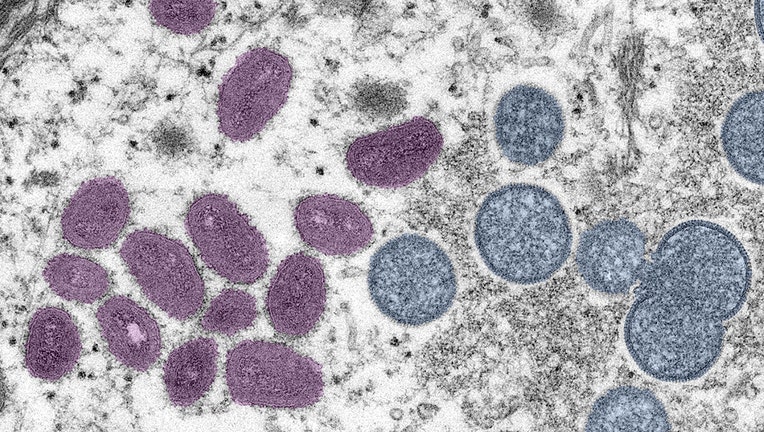
PHOENIX - Health officials in Arizona say they have confirmed a case of Mpox (formerly Monkeypox) that involves a different type of the same virus.
What we know:
In a statement released on July 22, officials with the Arizona Department of Health Services said the case involved a type of Mpox that is classified as "Clade I." They say this is the first time Arizona has seen a case of confirmed Clade I Mpox.
"The individual acquired the infection while traveling outside the country," read a portion of the statement.
Dig deeper:
According to a factsheet published by the Johns Hopkins Bloomberg School of Public Health, Clade I is one of two main types of Mpox. The factsheet notes identified Clade II as the one that caused an outbreak in the U.S.
The factsheet states that Clade I Mpox is "more likely to cause severe illness and death, especially in people who are immunocompromised." Officials say Clade I Mpox is "mostly transmitted through exposure to animals who carry the disease," while also stating that it can be transmitted through household contexts close sexual or intimate contact, and contaminated objects (fomites).
In comparison, the factsheet states that Clade II of Mpox is mostly transmitted through same-sex sexual contact.
As for the mortality rate for the virus, the factsheet states it ranges from 1% to 10% for Clade I, and from less than 1% to 4% for Clade II.
Local perspective:
In their statement, AZDHS officials say there are 34 reported cases of Mpox in Arizona as of July 21, which includes the Clade I case.
"There is currently no evidence of local transmission connected to this case," officials wrote.
What you can do:
The factsheet from Johns Hopkins states that two doses of the JYNNEOS vaccines are "expected to protect against both Clade I and Clade II infections."
Meanwhile, Arizona health officials say people should contact their healthcare provider or the local health department as soon as possible if they wer exposed to someone with Mpox, noting that vaccination can happen after exposure.
"Vaccination is most effective when given within four days of exposure but may still reduce illness when given within 14 days. Check for symptoms for 21 days after your last contact."
The Source: Information for this article was gathered from a statement released by the Arizona Department of Public Health, and from a factsheet published by the Johns Hopkins Bloomberg School of Public Health.