

2026 Election: Republican Arizona gubernatorial primary candidates debate
PHOENIX - Four people who want to be the Republican Party candidate in this year's gubernatorial election in Arizona took part in a debate on June 17.
Here's what to know.
Who organized the debate?
Per their website, the Citizens Clean Elections Commission is the official debate sponsor.
Who took part in this debate?
The four candidates who took part in the debate are Andy Biggs, Ken Miceli, Scott Neely and David Schweikert. All candidates hit on the ways they believe Arizona has suffered in the past four years under current Governor Katie Hobbs’ leadership.
Topics ranged from electability with independent voters, to cost of living and healthcare reform, to the addition of data centers in the state amid the ongoing conversation over water use.
Dig deeper:
Some of the candidates in this primary are known to Arizona voters. Biggs has served as a congressman since 2016, while Schweikert has been a congressman since 2011.
What are the candidates running on?
Biggs
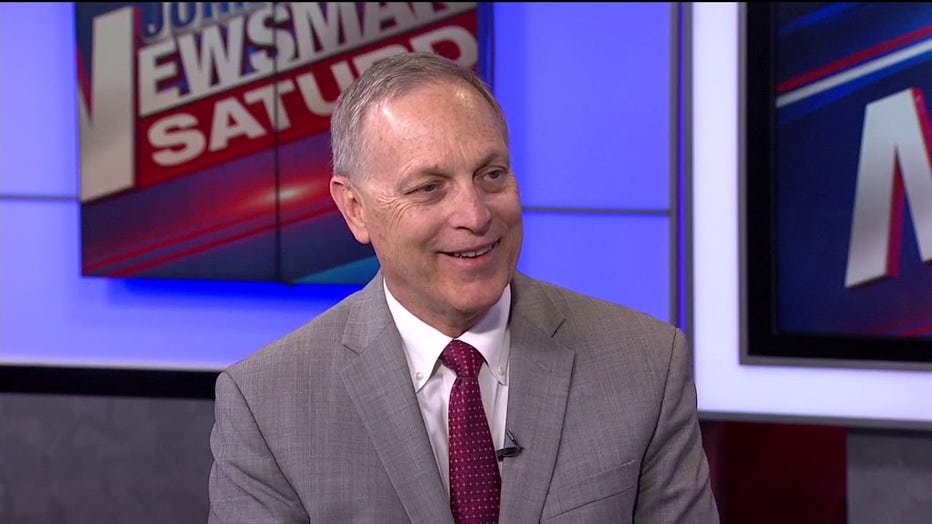
Rep. Andy Biggs of Arizona's 5th District (file)
On his issues page, Biggs states he supports partnering up with President Trump and local law enforcement officials on border issues, as well as protecting "the rights and freedoms of Arizonans to make their own education and health choices, supporting school choice policies and enacting the [Make America Healthy Again] agenda at the state level."
Miceli
Miceli's website contains a policy platform, where he states he supports lowering state income taxes for families that earn less than $75,000 a year. He also states he supports reforms to zoning laws that he believes can increase the housing supply by 25% over the course of four years, as well as opposing "any red flag laws or unconstitutional gun confiscation" and using AI to improve government efficiency and reduce waste.
Neely
On his campaign website, Neely states he supports plans to use Arizona's brackish groundwater by developing mini-desalination plants. He also states he supports using efforts to efficiently use funding to expand internet access and support EV charging networks in Arizona.
Schweikert
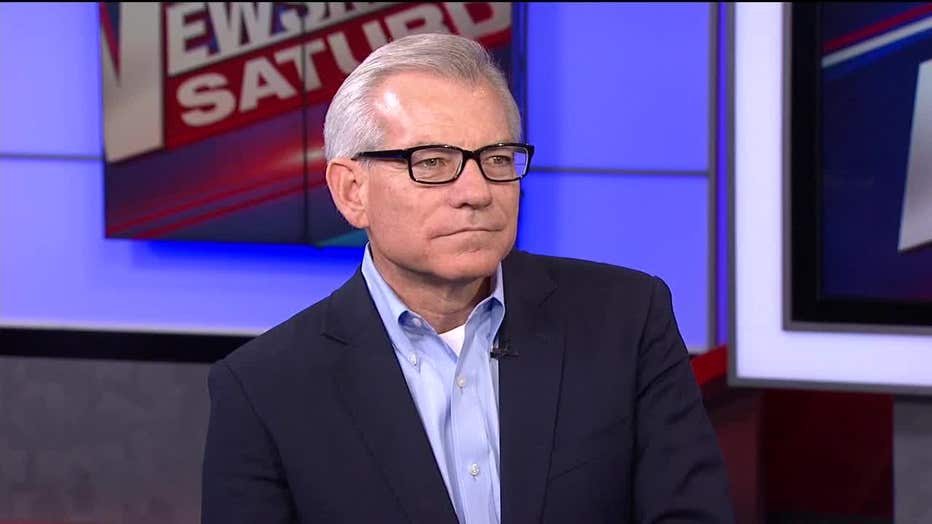
David Schweikert (file)
Per his issues page, Schweikert supports cutting regulations and lower taxes, as well as "state-based solutions to crack down on illegal immigration" and reforms to the Arizona state budget.
What did they address?
Water management
Candidates debated the severity of the state's water situation, with Schweikert and Biggs characterizing it as a management issue rather than a shortage. Neely and Miceli advocated for desalination projects and expanded water infrastructure. Neely specifically proposed requiring data centers to build their own desalination plants to avoid polluting groundwater, while Biggs supported the state's current moratorium on sales tax breaks for new data centers to curb excessive water and power usage.
- Biggs: "You think about it, data centers are probably going to chew up 350–650 megawatts of power depending on the size of that data processing center. They’re gonna use water, and quite frankly it’s a scrambled egg situation. I’ve been all over the state, I’ve talked to mayors, I’ve talked to councils and some support it, they want to have it, others don’t. But here’s where the real rub is, where’s the power gonna come from and where’s the water gonna come from?"
- Schweikert: "It is a crisis, but it’s actually what wet water is available to us, so our stress right now is the Central Arizona project. You actually see the agreement to have a discussion in regard to buying the excess water out of San Diego County. Here’s your math problem on some of that desalinization – we’re probably going to have to do it but that’s $3,000 an acre foot. Our internal water we have here in Arizona is $300 an acre foot."
- Neely: "I will not allow data centers in the state of Arizona unless they build their own desalinization plants at the data center at the cost to them. We give them no tax subsidies. They build their own desalination plants so when they suck their water in and they push it back out, they don’t pollute our environment, and they’re gonna build their own power supplies, and I’m gonna advocate for micronuclear in the state of Arizona, so the data centers can have their own micronuclear plants."
- Miceli: "We are in a crisis. My plan is to generate new ways of bringing in new water through the flow of rainfall and expanding our aquifers. That’s what our plan is. I have a plan, I don’t know if these other gentlemen have a plan, but I have a plan."
Economic affordability
To combat Arizona's low affordability ranking, candidates proposed varying strategies. Biggs and Neely advocated for eliminating the state income tax, with Biggs suggesting the recovery of billions in Medicaid fraud to offset the revenue loss. Neely additionally proposed eliminating property taxes for citizens aged 65 and older. Miceli proposed reducing property taxes by 50% in his first year and eliminating them entirely in his second, while Schweikert focused on wage growth and streamlining state trust land use to increase housing supply.
Education
Candidates expressed strong support for school choice and the expansion of Empowerment Scholarship Accounts (ESAs). Miceli and Neely emphasized the importance of pivoting toward trade schools to address workforce shortages in essential industries, with Neely proposing that ESAs be paired with incentives for small businesses to train students. Schweikert highlighted the need to address court-ordered education financing reform, while Biggs argued for the full expansion of ESAs to enhance parental choice.
School Choice
- Biggs: "You should actually expand the ESA program if there’s a fraud. One thing we’ve found is, if there’s a fraud, the reason you’re hearing about it is because they’re catching people if they fraudulently use ESAs. There’s also tremendous fraud in the traditional system that we have to come in and find out and get that and stop that, and so, I’m a big ESA proponent."
- Schweikert: "The amount of money that’s spent for me to choose homeschool or something here compared to what we spend for that same child in traditional education. There’s a differential, you can actually put some money back in the bank."
- Neely: "As far as transparency in ESAs, I do think there should be some regulation on the ESAs and some transparency with that but I also think we should expand ESAs. I believe ESAs, and as a matter of fact, I want ESAs in trade schools. I want to merge those two together. I want small businesses to be able to team up with the ESA program."
- Miceli: "The answer is trade schools. We need to implement more trade schools here in Arizona, and I’m a very big proponent of trade schools. An electrician, someone who repairs HVAC, air conditioning. They can do a two-year term in trade schools and come out making $60 to $80k a year."
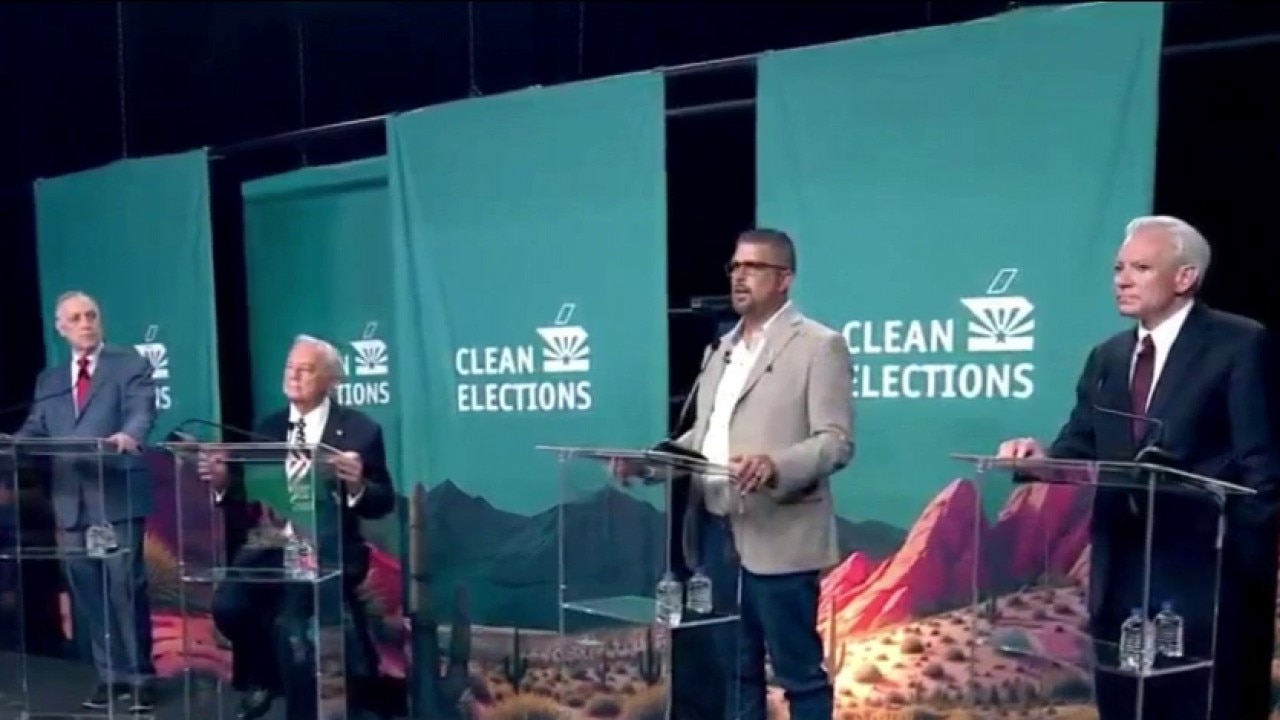
4 candidates discuss school choice, cost ofliving during Arizona GOP Governor debate
Arizona's four Republican candidates for governor faced off on the debate stage on June 17. FOX 10's Nicole Krasean breaks down the big moments, and why they believe the state has suffered under current Gov. Katie Hobbs.
Election integrity
The debate featured contrasting views on voting systems. Neely advocated for a return to "one day, one vote" with in-person, paper ballots, largely eliminating mail-in voting. Biggs endorsed adopting the Florida model of election standards, while Miceli proposed implementing biometric safeguards to verify voter identity and citizenship. Schweikert defended the state's existing mail-in voting system, noting its high usage among Arizonans while acknowledging the need for updated voter rolls and security measures.
Healthcare
Discussions centered on rising premiums and Medicaid reform. Schweikert argued for a more holistic, market-based approach to healthcare that addresses nutritional health to reduce costs. Biggs proposed giving individuals direct control over healthcare funds through expanded Health Savings Accounts and emphasized the need for more medical residency programs in Arizona. Both candidates supported rigorous efforts to identify and eliminate fraud within the state's Medicaid system.
What about the Democratic debate or the No Labels debate?
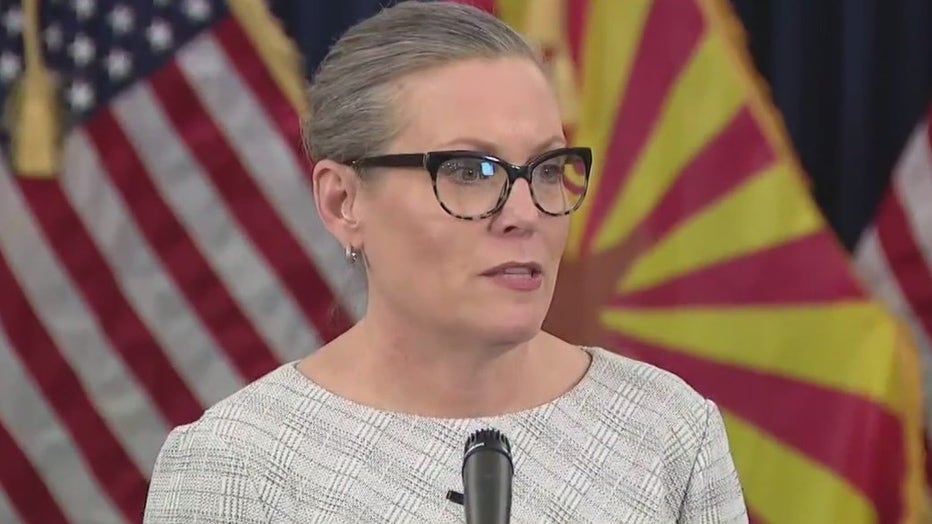
Arizona Governor Katie Hobbs
According to the Arizona Secretary of State's Office, there is only one candidate in the Democratic Party gubernatorial primary: incumbent Katie Hobbs.
Big picture view:
On the Citizens Clean Elections Commission's website, it is stated that only contested races will have a debate. Therefore, a Democratic Party debate for the gubernatorial primary was not organized.
As for the No Labels Party primary for governor, while there are two candidates in that race, only one candidate — Teri Hourihan — has agreed to take part.
During this election cycle, the commission has been known to conduct one-on-one interviews if only one candidate in a contested race decides to take part in the debate. One example of this kind of arrangement is the interview that was done with Kai Newkirk, who is running against Greg Stanton in the Democratic Congressional District 4 primary.
When are the primaries?
Primary elections will happen statewide on July 21, according to the Arizona Secretary of State's Office. The last chance to register to vote is June 22.
Early voting starts on June 24.
The Source: Information for this article was gathered from the Citizens Clean Elections Commission's website, as well as from the campaign websites for Andy Biggs, Ken Miceli, Scott Neely, and David Schweikert.