

Colorado River water cuts: Arizona impacted under new proposal
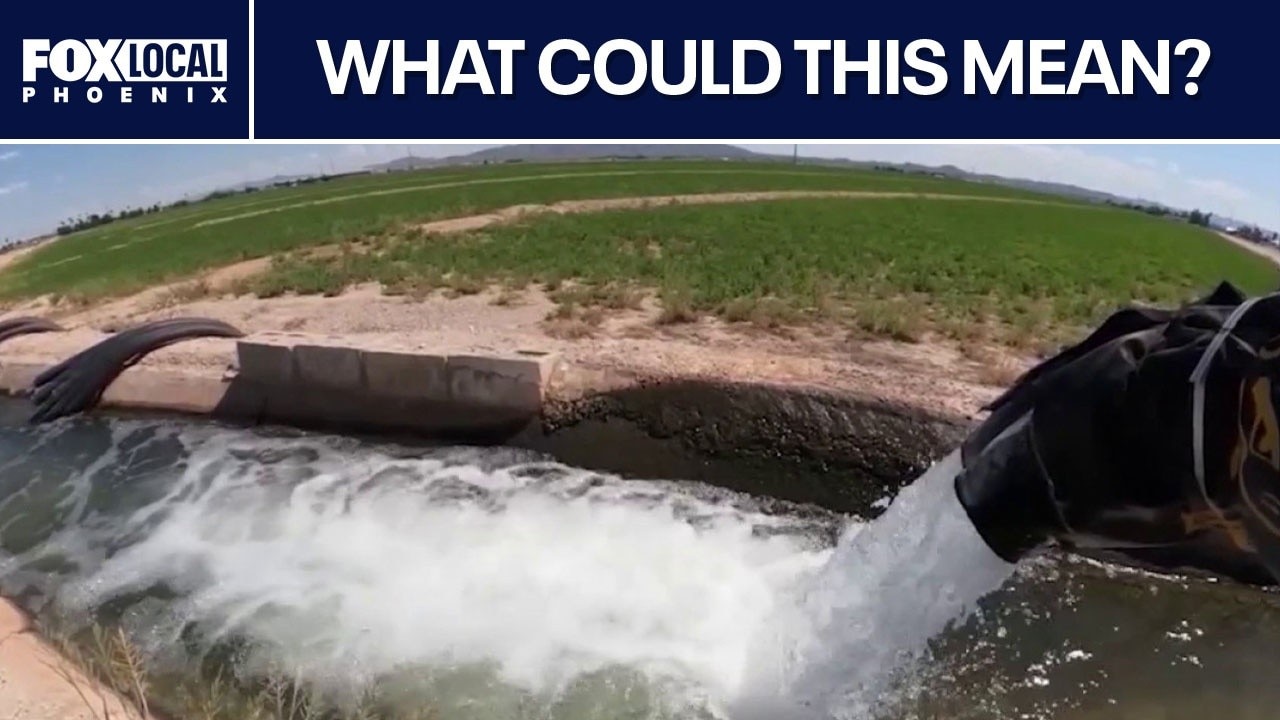
AZ water supply faces reductions under federal plan
Feds released a roadmap calling for massive reductions in Arizona's water supply. The proposal could force cities to spend big on alternative sources, with those higher costs being passed directly on to local consumers. FOX 10's Megan Spector reports.
PHOENIX - A major decision on the future of Arizona’s water supply is getting closer, and the state could be facing deep cuts.
What we know:
After months of failed negotiations between states, the federal government has unveiled a framework that calls for mandatory water reductions across the Lower Basin states.
The proposal released on July 31 by the U.S. Bureau of Reclamation says Arizona, California and Nevada could face collective cuts up to 3 million acre-feet through 2036, which is about enough water to serve more than 25 million people a year, the Associated Press reports.
These cuts do not mean the tap will run dry tomorrow, but they could lead to changes to where water comes from and how much it costs.
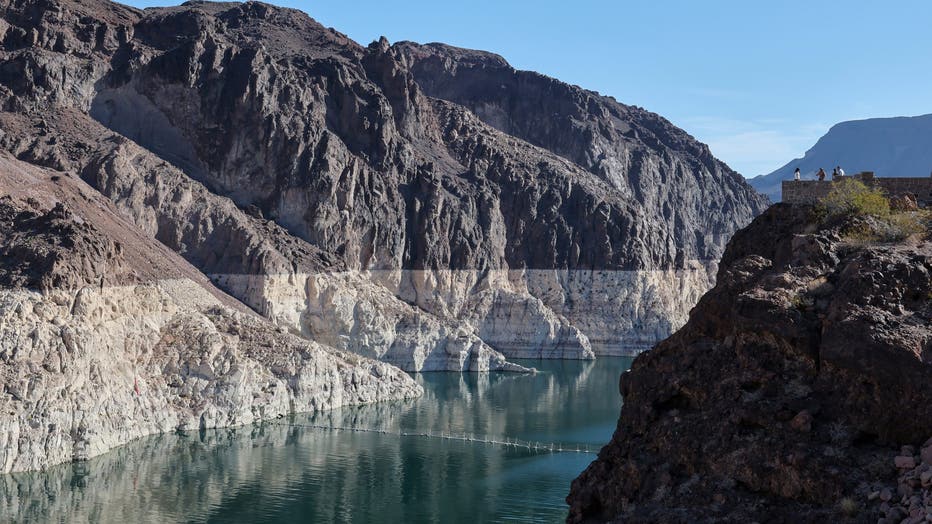
Visitors look out at a white "bathtub ring" of mineral-stained rocks left by higher water levels in The Narrows upstream of the Hoover Dam on July 25, 2026, in the Lake Mead National Recreation Area, Arizona. (Photo by Ethan Miller/Getty Images)
The plan would also allow annual releases between 5 million and 12 million acre-feet from Lake Powell.
Colorado, New Mexico, Utah and Wyoming are temporarily spared from facing mandatory water cuts.
Governor Hobbs' statement on proposed water cuts
What they're saying:
"Today, the federal government released a broad range of alternatives for how the Colorado River will be managed over the next ten years. Within that range is the opportunity for the federal government to adopt the commonsense, compromise proposal put forward by Lower Basin States for 2027 and 2028. Our proposal is one of the largest conservation programs in Colorado River history and builds on Arizona’s decades-long commitment to responsible water stewardship. While this FEIS still contains unacceptable options that include the federal government forcing Arizona to take the majority of draconian water cutbacks, implementing the Lower Basin agreement would protect Arizona from massive water cuts, distribute reductions more fairly across the Lower Basin States, and provide stability and protection to the water supply that our communities rely upon.
As the federal government finalizes their operating plans for 2027 and 2028, my administration will be working around the clock advocating for an approach that protects the stability of the system, distributes water reductions equitably, and ensures water security for all Colorado River water users. I remain steadfast in my commitment to a long-term Colorado River solution that ensures every state in the system shares in its conservation.
Arizona provides the agricultural produce, critical minerals, weapons defense systems and cutting-edge semiconductors that feed America, protect America and fuel America’s high-tech economy. No other state in the Colorado River basin can say the same. We developed the Lower Basin Proposal to increase water resiliency for the region and ensure that no single state was bearing the burden alone. Inequitable, federally imposed cuts to our Colorado River water allocation will be unacceptable to Arizonans, and will put every American at risk. Previous federal proposals to slash Arizona’s Colorado River water would be devastating for our nation as we work to compete with China in the AI race, onshore critical supply chains, feed the country, and rebuild our depleted missile stockpile. I will continue making that case to the federal government and fighting relentlessly to protect Arizona’s fair share of the Colorado River so our families can feel confident we will have the water we need to turn on the taps, nourish our crops, and grow our economy well into the future."
'They could surprise us'
"The federal government is telling us in this plan that they think we need in the lower basin up to 3 million acre feet in reductions in demand in order to keep the system working properly," said Cynthia Campbell, ASU’s Director of Policy Innovation for the Arizona Water Innovation Initiative.
However, the exact extent of the cuts and how they will be split remains unclear.
"I would say we definitely do not have overall stability or clarity on what happens in the medium-range future of the Colorado River," Campbell said.
Instead of a long-term deal, the federal government plans to issue short-term, two-year plans unless the basin states can finally agree. Lower Basin states previously offered a 20% cut, but they could face more.
"I expect that the bureau of reclamation is going to try and incorporate that lower basin proposal as much as it can make that its plan, but we haven’t seen the plan yet. So theoretically, right now they could surprise us," said Sarah Porter, ASU Kyl Center for Water Policy Director.
Dig deeper:
Because of Arizona's junior water rights on the river, those cuts would hit the state harder than California or Nevada, which have senior rights. Adding to the friction, the proposed plan leaves the Upper Basin states off the hook.
"There is nothing in the federal plan which is compelling the upper basin states – Colorado, Utah, Wyoming, New Mexico – to do anything in terms of conserving water," Campbell said.
Arizona has been preparing for water cuts for years, but we could still feel the impacts.
"I don’t expect to get a call from my water provider telling me to stop using water. I do expect that there will be more push than ever for people to find ways to reduce their water use permanently, and I expect that water rates are going to go up all over central Arizona because cities are now having to make investments in supplies to make up for what they’re expecting on the Colorado River," Porter said.
What's next:
For now, it remains a waiting game to see just how severe the final cuts will be. Experts say specific numbers could arrive as early as next week as officials monitor the decision and its impact on Arizona.
The Source: Information in this report was gathered from the federal government, the Bureau of Reclamation, ASU Water Innovation Initiative Director of Policy Innovation Cynthia Campbell, and ASU Kyl Center for Water Policy Director Sarah Porter.