

Arizona candidates debate inflation, healthcare, and housing in 4th District race
Arizona candidates clash in CD4 debate
Congressional candidates outline plans to address housing affordability, healthcare reforms, and data center regulations in Arizona.
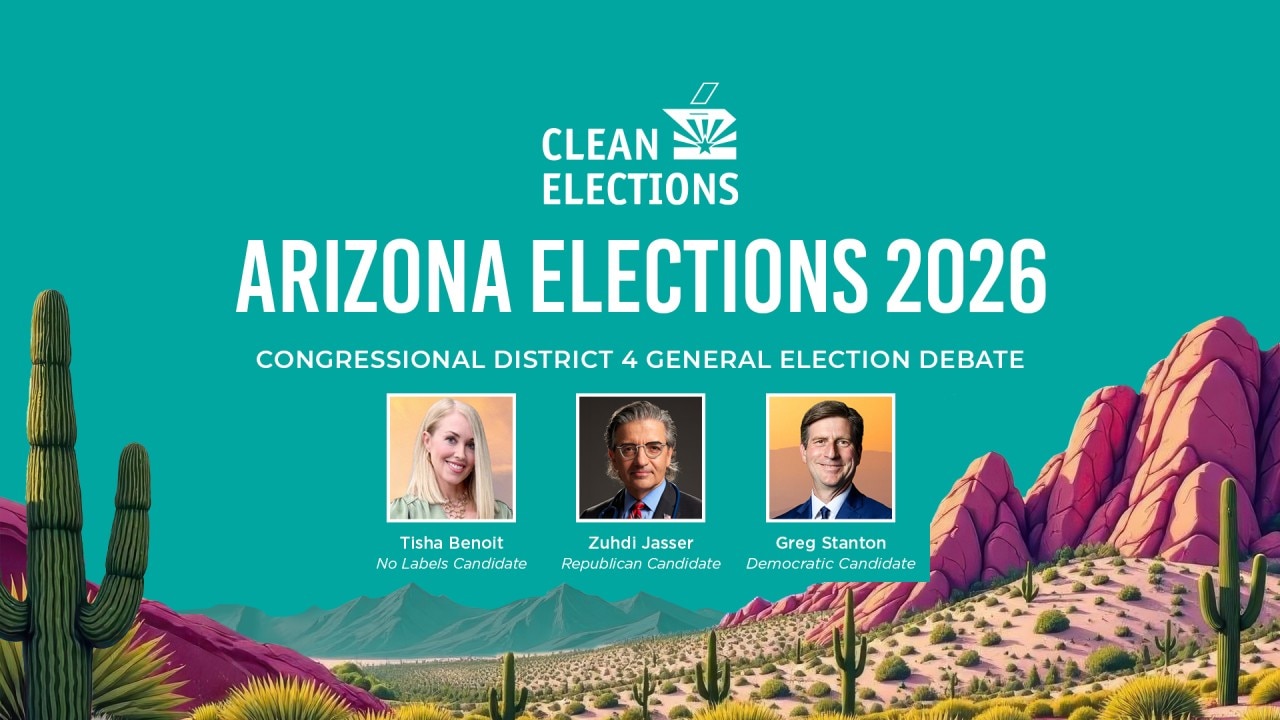
PHOENIX - Three candidates competing for Arizona's 4th Congressional District clashed over rising living costs, healthcare policy, and housing affordability during an afternoon debate on Monday, Oct. 5.
Democratic incumbent Greg Stanton, Republican candidate Zuhdi Jasser, and No Labels Party nominee Tisha Benoit spent much of the candidate forum presenting sharply contrasting visions for addressing financial pressures on Arizona families ahead of the November general election.
Inflation, Everyday Expenses:
Stanton framed rising costs as a consequence of Republican leadership and policies enacted under President Donald Trump. He highlighted tariffs on groceries and household goods, higher fuel costs linked to conflict in Iran, and increased healthcare costs following the expiration of Affordable Care Act premium tax credits.
To lower everyday expenses, Stanton advocated for eliminating federal tariffs, taking legislative steps to end the conflict in Iran, and reinstating tax credits to reduce ACA premiums. He argued that tariffs act as an unauthorized tax on consumers and emphasized that revenue measures must go through Congress.
Jasser, a physician, Navy veteran, and small-business owner, blamed current Democratic leadership for systemic inflation, citing federal spending and money printing initiated during Stanton's early tenure in office.
As an immediate measure, Jasser proposed introducing legislation on his first day in office to temporarily suspend the federal gas tax. He also called for structural healthcare reforms, including allowing insurance sales across state lines, implementing price transparency, and adopting "most favored nation" status for international drug pricing to lower consumer costs.
Benoit, a traditional Chinese medicine practitioner and small-business owner, emphasized nonpartisan problem-solving focused on practical skills and basic needs. She advocated expanding vocational and trade programs for careers such as nursing and construction as an alternative to four-year college degrees.
Benoit also urged a shift toward preventative care to curb long-term medical spending while voicing support for increased price transparency and market competition among healthcare providers and drug managers.
Health Reforms, Rx Costs:
Debating specific modifications to the healthcare system, Jasser reiterated his criticism of the Affordable Care Act, calling it a driver of market consolidation that limits patient choice and inflates prices. He argued that private equity firms and large healthcare systems act predatorily, advocating instead for equal pricing for identical services across clinics and hospitals, anti-consolidation oversight, and international parity in prescription drug pricing.
Stanton defended his legislative record, citing provisions in the Inflation Reduction Act that authorized Medicare to negotiate select prescription drug prices, capped insulin copays at $35 per month for seniors, and set a $2,000 annual cap on out-of-pocket costs. He proposed expanding Medicare price negotiations to all consumers and called for legislation ending the use of artificial intelligence algorithms in Medicare prior-authorization decisions, specifically targeting programs like WISER to return medical authority to doctors.
Benoit characterized the current ACA framework as unstable, noting frequent insurance carrier turnover, and called for comprehensive reform. She highlighted pending legislation to add acupuncture coverage to senior Medicare benefits as a practical preventative measure and emphasized evaluating policies strictly based on public utility rather than partisan origin.
Housing, Foreign Investment:
Addressing housing shortages and rising real estate prices, Stanton highlighted recent bipartisan legislation aimed at curbing corporate residential land-buying practices. He outlined additional federal strategies, including local zoning overhauls, density increases around transit hubs, expedited environmental permitting, direct down-payment assistance for first-time buyers, and full funding for the Low-Income Housing Tax Credit.
Jasser placed primary responsibility for housing market strain on broader inflation under Democratic policies, citing reduced home-affordability metrics since 2019. He advocated for strict federal restrictions on foreign entity property purchases, specifically pointing to acquisitions by foreign governments and international funds that outbid local families.
Data Centers & Regulations:
The candidate then addressed federal regulation of data centers, their localized economic impact, and safeguards for local water and energy supplies.
Addressing federal oversight, Benoit urged increased scrutiny regarding the potential long-term health and environmental effects of large-scale facilities. She raised concerns over operational noise levels, citing external decibel ranges of 40 to 59 and internal decibel readings reaching up to 120 to 125.
To mitigate local strain, Benoit proposed mandating sustainable infrastructure standards for data center developments, including closed-loop cooling systems, recycled water usage, and renewable energy adoption. She emphasized that technological innovation must proceed without compromising quality of life for residents.
Economic Incentives and Municipal Control
Jasser framed the expansion of data centers as a balance between economic progress and community protection. Applying a medical standard of prioritizing non-harm, he advocated for strict community guardrails requiring developers to cover their own power and infrastructure expenditures.
To incentivize local acceptance, Jasser proposed a federal-state framework to offer property tax reductions to communities hosting data centers, arguing the projects would expand local tax bases to fund public schools and infrastructure. He added that the U.S. must support data center growth to maintain global leadership in technological innovation against international competitors like the Chinese Communist Party.
Federal Land Mandates and Tax Incentives
Stanton focused on executive transparency, pointing to recent actions by the administration to evaluate four data centers on federal Bureau of Land Management (BLM) property in Arizona without sufficient public disclosure. Stanton said he joined members of the state's congressional delegation to demand details regarding community and environmental impacts.
Calling for federal legislation, Stanton argued that developers must absorb all associated infrastructure, energy, and environmental costs rather than shifting them onto surrounding municipalities. He praised local decisions, such as the city of Chandler's refusal of a proposed facility, to emphasize that federal policy should not override municipal zoning and local governance.
Stanton also advocated for the federal elimination of tax breaks for data center operators, aligning his position with recent legislative changes in Arizona led by Gov. Katie Hobbs.
What parts of Arizona does the 4th Congressional District cover?
According to Congress.gov, Arizona's 4th Congressional District covers parts of Phoenix, including the whole of Ahwatukee, as well as Chandler, Tempe, and parts of Mesa.
Who took part in the debate?
- Tisha Benoit (No Labels)
- Zuhdi Jasser (Republican)
- Greg Stanton (Democrat)
On Benoit's nomination paper from March 2026, she listed herself as seeking the nomination of the Arizona Independent Party for this congressional district. However, the website for "Arizona Independent Party" prominently lists the party's name as "No Labels Party of Arizona."
Who are the candidates?
Tisha Benoit
While her website did not contain a biography, Benoit listed what she called the "seven pillars of renewal" in the issues section of the website. They include:
- Cutting regulations deemed unnecessary, strengthening "pro-growth tax policies," tackle inflation, expand U.S. manufacturing, and support for "greater transparency and accountability" over data centers.
- Strengthen access to "preventive first healthcare," and shifting the focus from "reactive disease treatment to proactive health optimization."
- Support for clear rules that prevent members of Congress from trading stock.
- Fixing education by "realigning the entire system" and "reconnecting education to the real economy."
- Support for border security and removal of "dangerous criminal offenders" who are in the country illegally.
- Strengthen "prevention, rehabilitation, and mental health access" as a way to deal with the opioid and homelessness crises.
- Support law enforcement.
It should be noted that the No Labels Party of Arizona did not endorse Benoit or any other candidates for this race.
Zuhdi Jasser
Per his campaign biography, Jasser's parents were Syrian refugees who came to the U.S. to escape political instability. As for Jasser himself, he attended university in Wisconsin, and served a stint in the U.S. Navy.
A section of his website lists the following political positions:
- Rein in spending considered to be wasteful and cutting "needless regulations" as a way to reduce costs and promote more economic opportunity.
- Support for a balanced budget amendment to the U.S. constitution as a way to control spending.
- Support for more resources for border agents
- Support for "educational freedom in education"
- Advocating for advanced military spending as a way to promote military readiness
- Advocating that America should be "present globally in the war of ideas for liberty and freedom"
Greg Stanton
Stanton is the incumbent for this district. The former Phoenix mayor was first elected to Congress in the state's 9th Congressional District in 2018, defeating Republican Stephen L. Ferrara.
On his website, Stanton listed some of his records on various issues in recent years, including:
- Voting against President Donald Trump's proposed medicaid cuts in his budget bill.
- Securing millions of dollars in funding to reopen or modernize water reclamation facilities in Tempe and Chandler.
- Securing a $1.2 billion investment at ASU to "establish a flagship semiconductor research and development facility in Tempe."
- Pushing the Social Security Administration to undo service changes that resulted in phone service cuts and field office closures.
- Voting on various measures that aim to protect abortion rights, abortion access and access to contraception.
- Voting for the release of the Epstein files and demanding their full release.
- Helping to introduce and pass the Respect of Marriage Act, which protected same-sex marriage under federal law.
Are there other candidates who weren't invited?
According to the Arizona Secretary of State's Office, there is a fourth, write-in candidate named Steven Sanders. In nomination papers, the Tempe man lists himself as being of the No Labels Party.
The Citizens Clean Elections Commission's website did not mention Sanders.
When is the general election?
The general election takes place on Nov. 3 this year.
Timeline:
The Arizona Secretary of State's Office lists the following for voter registration and voting:
- Voter registration deadline: 11:59 p.m. (Arizona Time) on Oct. 5
- Start of early voting and mailing of early ballots: Oct. 7
- Deadline to request ballot-by-mail: At least 11 days before Election Day
Featured
Arizona 2026 voter checklist: Important deadlines, ID rules, and voting options
Everything you need to know to make your voice heard. Get the facts on mail ballot cutoff dates, emergency voting hours, and reporting election violations.
The Source: Information for this article was gathered from the Arizona Citizens Clean Elections Commission's website, the campaign websites for Tisha Benoit, Zuhdi Jasser, and Greg Stanton, the Arizona Secretary of State's Office, and the website for the No Labels Party of Arizona.