

Why does it take Arizona so long to count election results?
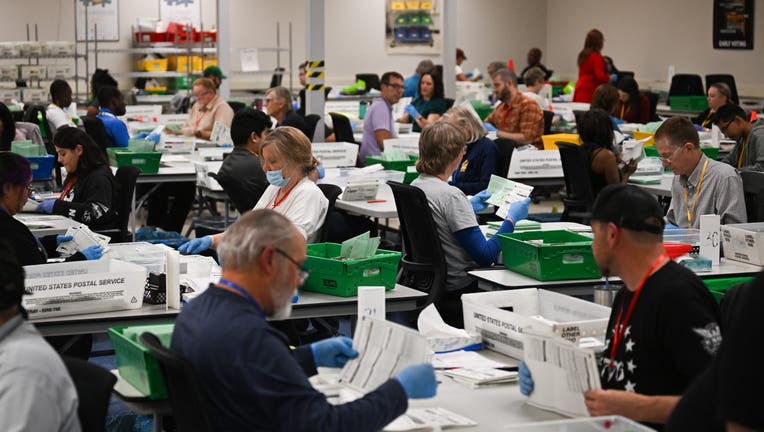
Pairs of election workers from different political parties open and inspect mail-in ballot envelopes containing voted ballots after they completed signature verification during processing inside the Maricopa County Tabulation and Election Center (MCT (PATRICK T. FALLON/AFP via Getty Images)
PHOENIX - When the first batch of election returns is posted at 8 p.m. MST on November 3, Arizona voters hoping to know the final outcome of closely contested races before going to sleep will have to wait.
Instead of wrapping up in a few hours, ballot counting across the state routinely stretches over several days and even weeks. The delay is not a sign of administrative failure or equipment malfunction, officials say. Rather, it is the direct result of Arizona election laws requiring workers to verify voter signatures by hand, give voters time to correct signature issues and conduct audits alongside members of both political parties before any race is made official.
Big picture view:
The schedule for releasing election returns follows a set timetable across Arizona’s 15 counties.
At 8 p.m. on election night, election departments release their very first batch of results. That initial drop reflects only early mail-in ballots that arrived and were tabulated before Election Day.
LIVE: 2026 Arizona General Election: Updates, results as they come in
Between 9 p.m. and the early morning hours, counties upload ballots cast in person at vote centers. When polls close, bipartisan courier teams seal the tabulator memory cards in tamper-proof packages and drive them to county tabulation headquarters, like MCTEC in Maricopa County, where workers upload the data to secure servers.
The counting process slows down sharply once election night wraps up, when workers turn to the massive pile of "late earlies" — early ballots dropped off at polling places or drop boxes on Election Day itself.
What's the holdup?
What we know:
Nearly 9 in 10 of Arizona's 4.37 million registered voters opt for mail-in ballots over traveling to a physical polling place. Arizona is predominantly an early-voting state, but hundreds of thousands of voters hold onto their mail ballots until the final day and drop them off in collection bins at vote centers.
When a voter drops a sealed envelope directly into a collection bin, state law prohibits election workers from simply unsealing it on Election Day. Because no poll worker verified the voter's identity in person, every single envelope must be driven to a central facility to undergo strict verification.
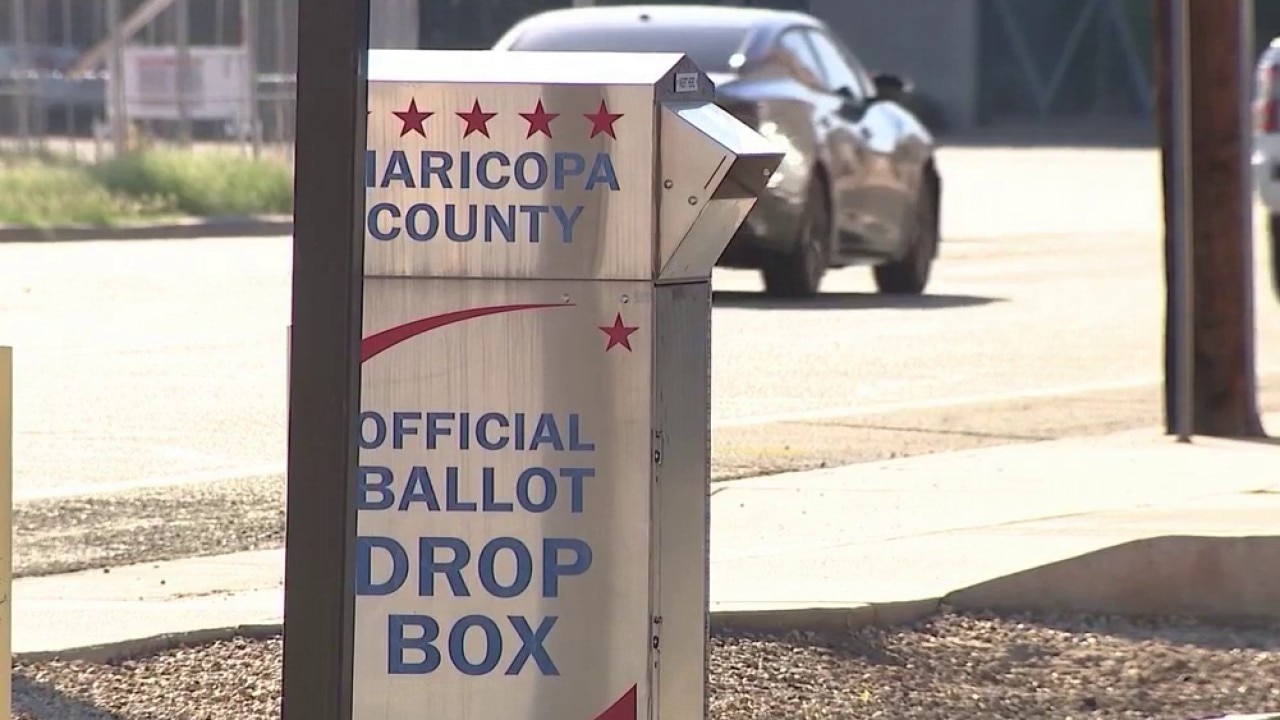
Maricopa County early voting surges
Maricopa County sees a significant increase in early ballot returns compared to the 2022 general election. FOX 10's Andrew Christiansen reports.
Workers must first scan the unique barcode on each green envelope to verify that the person has not already cast a vote elsewhere. Next, election staff pull up historical signatures from voter registration files and compare them side-by-side with the signature on the envelope. Only after the signature matches does a bipartisan board open the envelope, inspect the ballot for physical damage and send it to central scanners.
If a voter makes a stray pencil mark, writes in a candidate or uses shorthand notes like "this one" instead of filling out the oval, tabulation machines cannot guess the voter's intent. A bipartisan adjudication board made up of a Democrat and a Republican must visually inspect the ballot and unanimously agree on whom the voter intended to choose.
LIVE: How to watch ballot counting video feeds, track county results
"We know voters want results quickly, and we have a duty to count every eligible ballot," Coconino County Elections Director Eslir Musta said on Tuesday. "Arizona law requires verification of every signature on early ballots and gives voters five days to fix any issues, so counting continues after Election Day … Results that change after election night mean the process is working as intended."
What's different this year?
Local perspective:
In Maricopa County — one of the largest voting jurisdictions in the nation, with more than 2.5 million registered voters — officials have introduced changes to help chip away at the post-election backlog.
First, voters who bring a mail-in ballot to a polling location on Election Day can now choose to bypass the mail queue entirely. By showing a photo ID at the check-in desk, poll workers can verify the voter's identity in person.
"We're going to scan the bar code and, at that point, that's when the person's address, name, date of birth come up to make sure they haven't already voted," Maricopa County Deputy Elections Director Jennifer Liewer said.

Maricopa County primary runs smoothly with new ballot procedures
Maricopa County election officials report no major delays as 59,000 voters turn out on Election Day. More than 515,000 early votes have already been tabulated. FOX 10's Steve Nielsen learns more as Supervisor Kate Brophy McGee highlights a 30% conversion rate to immediate onsite tabulation for drop-off mail ballots.
Once verified in person, the worker stamps the envelope and the voter feeds the ballot directly into an onsite scanner, adding their vote to Election Night totals.
"This, hopefully, is going to address some of those problems," Liewer said.
Second, for the ballots that voters still choose to drop into collection boxes without checking in, the county recorder’s office updated its software to display envelope signatures and voter records side by side on computer screens, eliminating the need to scroll through archives.
"Instead of days to count to do signature verification after an election, we've cut that down to hours. We've done it in a bipartisan way with more checks and bipartisan oversight from both parties," Maricopa County Recorder Justin Heap said, adding he is "very, very confident" the adjustments will speed up processing.
What's next:
Even with faster processing, final certified election outcomes take weeks to formalize due to statutory post-election deadlines:
- Voter signature curing: If an early ballot signature is missing or does not match records, state law gives voters a mandatory five-day window after Election Day — until Nov. 8 at 5 p.m. — to verify their signature or provide identification.
- Mandatory audits: Before any count is finalized, counties review chain-of-custody paperwork, run post-election accuracy tests on scanners, and host political party representatives who conduct random hand counts of selected ballots.
- County canvasses: County boards of supervisors officially certify their local results between Nov. 9 and Nov. 19.
- Statewide certification: The Arizona Secretary of State formally certifies the official statewide results by the statutory deadline, which is Nov. 23.
What we don't know:
We still don't know exactly how many voters dropped off mail-in ballots on Election Day or opted to use the new onsite scanning option, meaning the precise number of days needed to resolve tight contests will depend entirely on the final volume of uncounted envelopes.
The Source: Information in this report was gathered from the Coconino County Elections Department, Maricopa County Elections, the Arizona Secretary of State's Office, the Arizona Citizens Clean Elections Commission, and previous reporting by FOX 10 Phoenix.